Wisdom teeth, or third molars, are the final set of teeth to emerge, usually appearing between the ages of 17 and 25. While some people never experience issues, many face complications like impaction, crowding, or infection.
Advertise Here
Reach thousands of patients looking for dental services.
Contact UsWhether you are preparing for the surgery or are currently in the healing phase, this guide provides a professional roadmap for a smooth procedure and a complication-free recovery.
1. Understanding the Procedure: Why Removal is Necessary
Wisdom teeth often lack the space to erupt properly. When a tooth is "impacted," it remains trapped under the gum line or bone, which can lead to:
- Pericoronitis: Infection of the gum tissue surrounding the tooth.
- Cyst Formation: Fluid-filled sacs that can damage the jawbone and roots.
- Crowding: Shifting of your straight, healthy teeth.
- Decay: Due to their position, wisdom teeth are notoriously difficult to clean, making them magnets for bacteria.
What Happens During Surgery?
Depending on the complexity and position of the teeth, your dentist or oral surgeon will use one of three sedation types:
- Local Anesthesia: To numb the immediate area.
- Sedation Anesthesia: To suppress your consciousness (you'll feel "dozy").
- General Anesthesia: For complex impactions where you will be fully unconscious.
2. The 24-Hour Critical Zone: Protecting the Clot
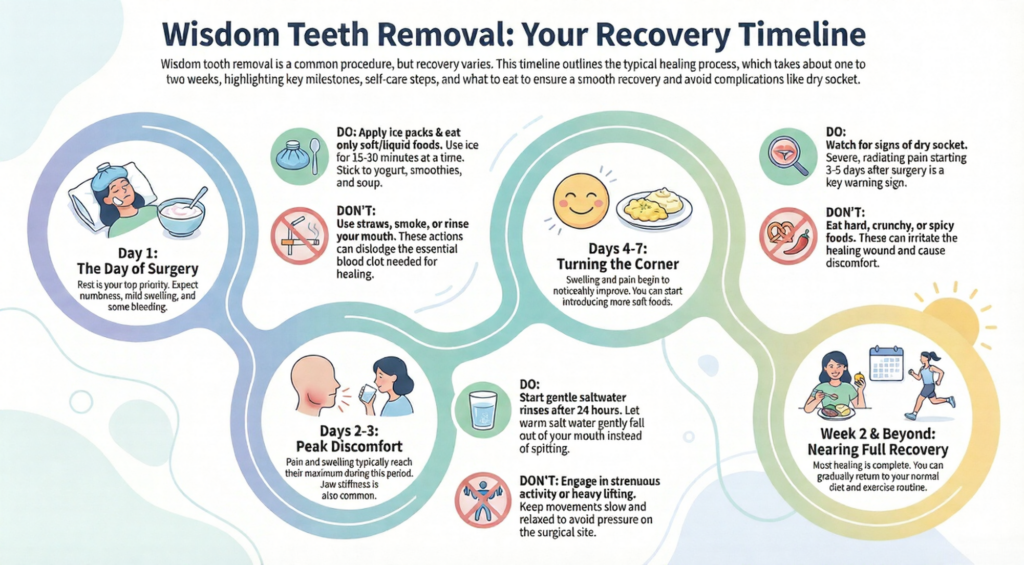
The most important goal on Day 1 is to protect the blood clot forming in the socket. If this clot is dislodged, you may develop dry socket (alveolar osteitis)—a painful condition where bone and nerves are exposed to air and food.
- Biting Pressure: Keep the gauze pad in place for 30–60 minutes post-surgery. If bleeding persists, replace it with a moistened black tea bag; the tannic acid promotes faster clotting.
- The "No" List: For 24 hours, DO NOT use a straw, spit forcefully, smoke, or drink carbonated beverages. The suction can physically pull the clot out of the socket.
- Rest: Keep your head elevated with 2-3 pillows to reduce jaw-level blood pressure and throbbing.
3. Your Recovery Timeline
Days 2–3: Managing the Peak of Swelling
Swelling usually peaks 48 to 72 hours after surgery.
- Cold vs. Heat: Apply ice packs (20 mins on/off) for the first 36 hours. After that, switch to warm, moist compresses to relax the jaw muscles and improve circulation.
- Salt Water Rinses: Start these 24 hours after surgery. Mix 1/2 tsp salt in 8oz warm water. Do not "swish"—lean your head side-to-side and let the water flow out over the sink.
Days 4–7: Regaining Mobility
- Jaw Stiffness: You may experience trismus (stiffness). Gently begin stretching your jaw as comfort allows.
- Monitor for Spikes: Pain should steadily decrease. If pain suddenly worsens on Day 4 or 5, it is a hallmark sign of a dry socket or infection.
Week 2 and Beyond: Long-term Healing
While the surface gums close in about two weeks, the jawbone takes 3–6 months to fully regenerate. Continue to keep the area clean of debris to prevent "smoldering" infections.
4. The Wisdom Tooth Diet: What to Eat
Nutrition is fuel for healing. Focus on high-protein, soft options.
| Phase | Recommended Foods | Foods to Avoid |
| Days 1-2 | Greek yogurt, lukewarm broths, protein shakes (no straw!), applesauce. | Anything hot, spicy, or crunchy. |
| Days 3-5 | Mashed potatoes, scrambled eggs, well-cooked pasta, hummus. | Rice, quinoa, or small seeds (they get stuck in the holes). |
| Day 7+ | Soft chicken, steamed vegetables, pancakes. | Chips, nuts, and popcorn. |
5. Professional Pain Management Tips
- The "Pre-emptive" Strike: Don't wait for the numbness to wear off. Take your first dose of prescribed pain medication or NSAIDs (like Ibuprofen) immediately after arriving home.
- Hydration: Dehydration increases pain sensitivity. Aim for 8-10 glasses of water daily.
- Oral Hygiene: Gently brush your other teeth, but stay clear of the surgical sites for the first 48 hours.
When to Call Your Oral Surgeon
Contact your clinic if you experience:
- Fever or chills.
- Difficulty breathing or swallowing.
- Pus or excessive discharge from the socket.
- Numbness that lasts more than 24 hours (Paresthesia).
- Before your surgery, read our guide on Why Smoking Before Dental Surgery is Risky.
- Struggling with what to drink? Check out our Sip-Safe Guide for Tooth Extractions.
- Dealing with throat pain? Find out if Wisdom Teeth Can Cause a Sore Throat.
Advertise Here
Reach thousands of patients looking for dental services.
Contact UsReady to find a specialist? Use the DentaDir Directory to find a top-rated oral surgeon near you.